We like to think the church is “making progress” around the world. But let’s be honest—how often do we stop to confront the gaps we haven’t yet filled? Millions of people have never even had a chance to hear the name of Jesus. Not because of opposition or politics alone, but because we haven’t been strategic enough in understanding the reality on the ground.
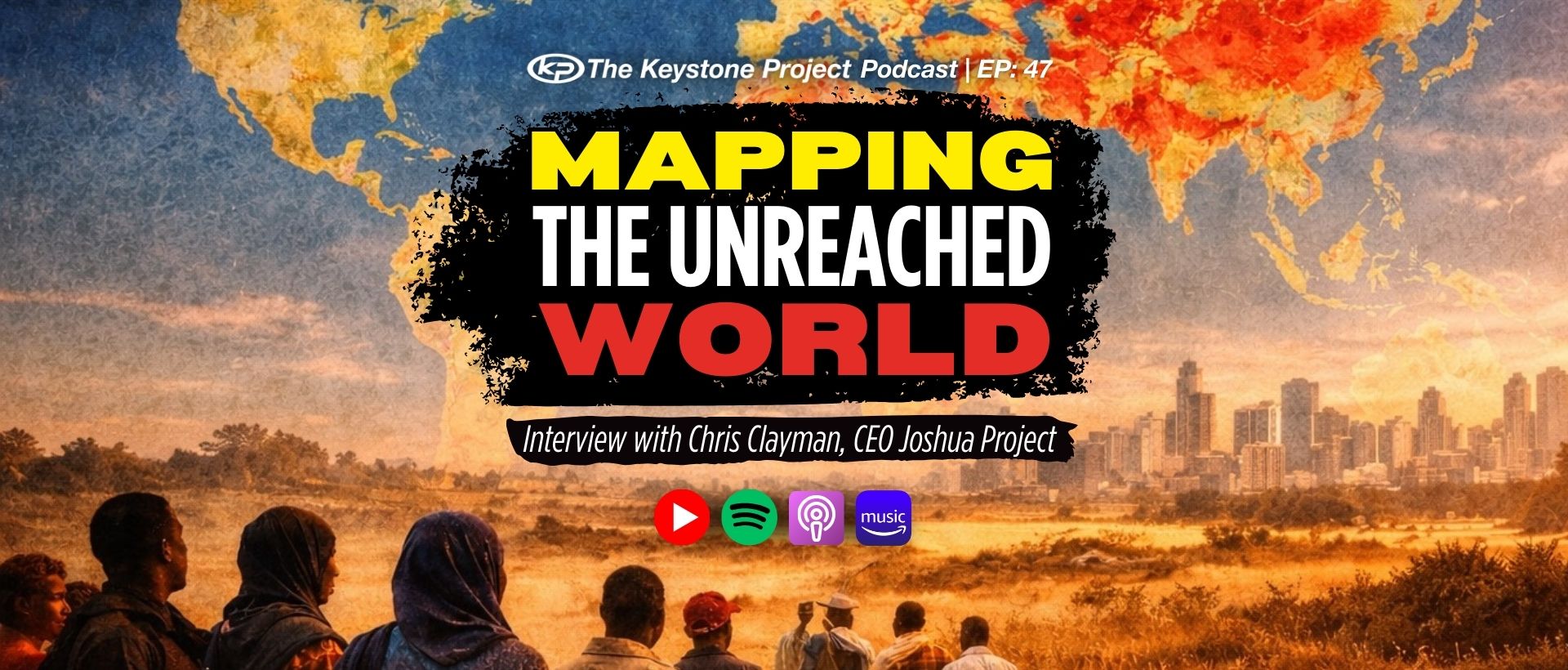
In the latest Keystone Project Podcast, I sat down with Chris Clayman, CEO of Joshua Project, and what struck me most wasn’t just the numbers—it was the human weight behind them. The stories. The lives. The opportunities slipping through the cracks while we remain comfortably distant.
Data Isn’t Just Numbers—It’s a Mirror
Here’s what Joshua Project’s research reveals:
- 3.6 billion people worldwide have little or no access to the gospel.
- Over 3,200 frontier people groups exist with less than 1 Christian for every 1,000 people.
- The top 300 frontier peoples represent 20% of the global population yet remain virtually untouched.
These aren’t just statistics—they’re a call to action. And yet, how many of us pause to reflect on them? For most churches, the numbers are abstract. But when Chris tells the stories behind the data, suddenly these groups become real people—neighbors we haven’t met, communities that could one day experience Christ because someone took a risk to go where the gospel hasn’t yet reached.
Frontier Peoples: The Hard Truth
Joshua Project distinguishes between “unreached” and “frontier” peoples. That distinction matters:
- Unreached: Less than 2% evangelical Christian, less than 5% self-identified Christian.
- Frontier: Less than 0.1% Christian—literally the hardest-to-reach populations on the planet.
If we’re serious about the Great Commission, the frontier isn’t optional. It’s where the need is greatest, and where the data screams the loudest. Chris’s insights force us to ask: Are we chasing convenience, or are we following where God is calling?
Why This Should Shake Us
Here’s the uncomfortable truth: We can pray, give, and talk about missions endlessly—but if we ignore the data, if we ignore strategy, then we’re only scratching the surface. God has given us information to act. Why remain passive?
Chris also challenges us to see missions differently:
- Missionaries aren’t the only ones responsible. Diaspora communities, local churches, even tech-savvy believers can play a role.
- Technology is a tool, not a replacement for sacrifice. The gospel needs presence, not just clicks.
- Every believer is a participant. You don’t need to leave your city to engage in the Great Commission—but you do need to see the world as God sees it.
The Takeaway
This episode isn’t just for missionaries or strategists—it’s for anyone who calls themselves a follower of Christ. The question Chris Clayman leaves us with is simple: Are we aware? Are we responsible? Are we acting?
The data is sobering. The stories are compelling. And the opportunity is now.
🎧 Listen to the full episode here. Don’t just consume the information—let it change how you see the world, how you pray, and how you act.